
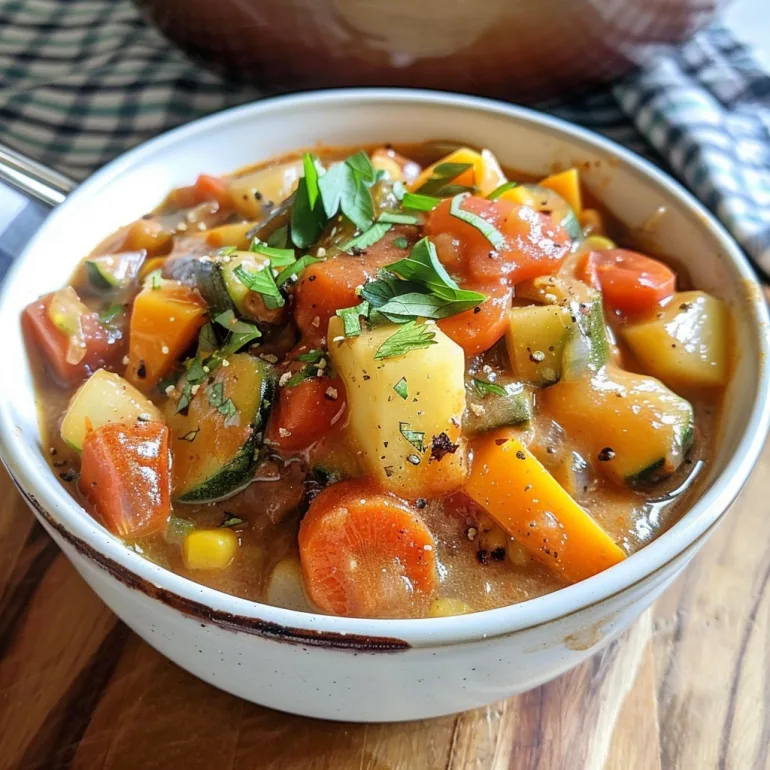
When the summer sun is blazing and your garden is overflowing with fresh produce, there’s nothing quite like a comforting bowl of summer vegetable stew to celebrate the season’s bounty. This vibrant dish transforms peak-season vegetables into a hearty, satisfying meal that’s both nutritious and incredibly flavorful. Unlike heavy winter stews, this lighter version showcases the natural sweetness and crisp textures of summer’s finest offerings.
Ingredients
| Ingredient | Quantity |
|---|---|
| Olive oil | 3 tablespoons |
| Yellow onion, diced | 1 large |
| Garlic cloves, minced | 4 |
| Zucchini, cubed | 2 medium |
| Yellow squash, cubed | 2 medium |
| Red bell pepper, chopped | 1 large |
| Eggplant, cubed | 1 small |
| Fresh tomatoes, diced | 4 large |
| Vegetable broth | 3 cups |
| Fresh basil, chopped | 1/4 cup |
| Fresh thyme | 2 teaspoons |
| Bay leaves | 2 |
| Salt | 1 teaspoon |
| Black pepper | 1/2 teaspoon |
| White beans, drained | 1 can (15 oz) |
| Fresh green beans, trimmed | 1 cup |
Essential Techniques for Building Maximum Flavor
The Importance of Proper Sautéing
Building layers of flavor starts with properly sautéing your aromatics and vegetables. First and foremost, heating your olive oil over medium heat ensures that your onions and garlic develop their sweet, complex flavors without burning. This foundational step creates the flavor base for your entire stew. Meanwhile, adding vegetables in stages based on their cooking times ensures everything reaches perfect tenderness simultaneously. For instance, harder vegetables like eggplant should go in before more delicate ones like zucchini. This methodical approach prevents some vegetables from turning mushy while others remain undercooked.
Fresh Herbs Make All the Difference
While dried herbs have their place, fresh herbs truly elevate this summer vegetable stew to restaurant-quality status. Fresh basil, in particular, adds a bright, aromatic quality that complements the tomatoes beautifully. Similarly, fresh thyme contributes an earthy, sophisticated note that dried versions simply can’t match. Therefore, it’s worth seeking out fresh herbs at your local market or growing them yourself. Adding some herbs early in the cooking process allows their flavors to infuse throughout the stew, while reserving some fresh basil for garnishing adds a burst of brightness right before serving.

Storage and Meal Prep Advantages
Making Ahead for Easy Weeknight Dinners
One of the best features of this recipe is how well it stores and reheats. Actually, the flavors often improve after a day or two as the vegetables continue to meld together. Prepare a large batch on Sunday, and you’ll have ready-made dinners for several nights. Store the stew in airtight containers in the refrigerator for up to five days. When reheating, add a splash of vegetable broth if it’s thickened too much. Alternatively, portion it into individual containers for grab-and-go lunches throughout the week. This make-ahead quality saves time and reduces the temptation to order takeout on busy evenings.
Freezing Instructions for Long-Term Storage
This stew freezes exceptionally well, making it ideal for batch cooking. Allow the stew to cool completely before transferring to freezer-safe containers, leaving some headspace for expansion. Properly stored, it maintains excellent quality for up to three months. When you’re ready to enjoy it, thaw overnight in the refrigerator and reheat gently on the stovetop. Some people prefer to slightly undercook the vegetables if they know they’ll be freezing portions, preventing them from becoming too soft upon reheating. Having homemade stew in the freezer means you always have a healthy, delicious option available when life gets hectic.
Troubleshooting Common Cooking Challenges
Preventing Mushy Vegetables
Nobody wants a stew where all the vegetables have turned to mush. The key is cutting your vegetables into uniform, substantial chunks that can withstand cooking time. Additionally, avoid overcooking by checking the vegetables regularly as they simmer. Different vegetables have different cooking times, so adding them sequentially ensures everything finishes perfectly. If you notice your vegetables becoming too soft, reduce the heat to maintain a gentle simmer rather than a rolling boil. Remember that residual heat continues cooking even after you remove the pot from the stove, so slightly underdone is better than overdone.
Adjusting Consistency and Flavor Balance
Sometimes your stew might turn out thicker or thinner than desired. If it’s too thick, simply add more vegetable broth or water until you reach your preferred consistency. Conversely, if it’s too thin, let it simmer uncovered for additional time to reduce and concentrate the flavors. Taste as you cook and adjust seasonings accordingly—tomatoes can vary in acidity, so you might need more salt or a pinch of sugar to balance flavors. Adding a squeeze of fresh lemon juice at the end brightens all the flavors beautifully. Trust your palate and don’t be afraid to make adjustments.
Serving Suggestions and Pairing Ideas
Perfect Accompaniments
This summer vegetable stew pairs beautifully with crusty artisan bread, which is perfect for soaking up the flavorful broth. Additionally, a simple arugula salad dressed with lemon vinaigrette provides a refreshing contrast to the warm stew. For a more substantial meal, serve it over quinoa, couscous, or brown rice to create a complete dinner. Garlic bread or cheesy breadsticks also make excellent sides that everyone loves. Meanwhile, a chilled white wine like Sauvignon Blanc or Pinot Grigio complements the fresh vegetable flavors perfectly. These pairing options allow you to create a complete dining experience tailored to your preferences.
Presentation Tips for Impressive Results
Even simple dishes deserve beautiful presentation. Serving your stew in rustic, wide-rimmed bowls showcases the colorful vegetables attractively. A drizzle of high-quality olive oil over the top adds visual appeal and extra flavor. Fresh basil leaves make a gorgeous garnish that signals the dish’s freshness. Furthermore, grated Parmesan cheese sprinkled on top adds both visual interest and savory depth. Consider serving family-style in a beautiful pot or Dutch oven for a more casual, communal dining experience. These simple touches transform a humble stew into something truly special.
Frequently Asked Questions
Can I use frozen vegetables instead of fresh for this summer vegetable stew?
While fresh vegetables provide the best texture and flavor, you can certainly use frozen vegetables in a pinch. However, keep in mind that frozen vegetables release more water as they cook, which may make your stew thinner.
How can I make this stew vegan-friendly?
This recipe is actually already vegan as written, provided you use vegetable broth and skip any cheese garnishes. The combination of vegetables and white beans provides plenty of protein and substance without any animal products. For added richness without dairy, try stirring in a tablespoon of nutritional yeast, which adds a slightly cheesy, savory flavor.
What’s the best way to cut the vegetables for even cooking?
Aim for uniform pieces about one inch in size for all your vegetables. This ensures everything cooks at roughly the same rate and provides a pleasant eating experience. For zucchini and yellow squash, cut them into half-moons or quarters depending on their diameter.
Can I add pasta or grains to make it more filling?
Absolutely! Small pasta shapes like ditalini, orzo, or shells work wonderfully in this stew. Add them during the last 10-12 minutes of cooking, or cook them separately and stir them in before serving to prevent them from absorbing too much liquid.
How long does this summer vegetable stew last in the refrigerator?
When stored properly in an airtight container, this stew keeps well in the refrigerator for four to five days. Make sure to let it cool to room temperature before refrigerating to prevent condensation and bacterial growth. The flavors actually develop and improve over the first couple days, making leftovers particularly delicious.
Conclusion
Summer vegetable stew represents the perfect marriage of convenience, nutrition, and outstanding flavor. This versatile recipe celebrates the season’s abundance while providing a practical solution for busy weeknights and meal planning. Whether you’re a seasoned cook or just beginning your culinary journey, this approachable recipe delivers impressive results every single time.
Print
Summer Vegetable Stew
- Total Time: 60 minutes
- Yield: 6 servings 1x
- Diet: Vegetarian
Description
A vibrant, garden-fresh stew featuring peak-season vegetables in a light, flavorful broth. Perfect for using up summer’s bounty while creating a nutritious, satisfying meal.
Ingredients
- 3 tablespoons olive oil
- 1 large yellow onion, diced
- 4 garlic cloves, minced
- 2 medium zucchini, cubed
- 2 medium yellow squash, cubed
- 1 large red bell pepper, chopped
- 1 small eggplant, cubed
- 4 large fresh tomatoes, diced
- 3 cups vegetable broth
- 1/4 cup fresh basil, chopped
- 2 teaspoons fresh thyme
- 2 bay leaves
- 1 teaspoon salt
- 1/2 teaspoon black pepper
- 1 can (15 oz) white beans, drained
- 1 cup fresh green beans, trimmed
Instructions
- 1. Heat olive oil in a large pot over medium heat. Add diced onion and cook for 5 minutes until softened and translucent.
- 2. Add minced garlic and cook for 1 minute until fragrant, stirring constantly to prevent burning.
- 3. Add eggplant cubes and cook for 5 minutes, stirring occasionally, until they begin to soften.
- 4. Add zucchini, yellow squash, and bell pepper. Cook for 5 minutes, stirring occasionally.
- 5. Add diced tomatoes, vegetable broth, thyme, and bay leaves. Bring to a boil.
- 6. Reduce heat to medium-low and simmer for 15 minutes until vegetables are tender.
- 7. Add white beans and green beans. Continue simmering for 10 minutes.
- 8. Stir in fresh basil, salt, and pepper. Remove bay leaves before serving.
- 9. Taste and adjust seasonings as needed. Serve hot with crusty bread.
Notes
Store leftovers in an airtight container in the refrigerator for up to 5 days. Freezes well for up to 3 months. Add cooked pasta or grains for a heartier meal. Garnish with fresh basil, Parmesan cheese, or a drizzle of olive oil.
- Prep Time: 20 minutes
- Cook Time: 40 minutes
- Category: Main Dish
- Method: Simmering
- Cuisine: American
Nutrition
- Serving Size: 1 bowl (approximately 2 cups)
- Calories: 185
- Sugar: 9g
- Sodium: 580mg
- Fat: 8g
- Carbohydrates: 24g
- Fiber: 7g
- Protein: 8g
Keywords: summer vegetable stew, garden vegetable stew, fresh vegetable stew, vegetarian stew, seasonal vegetables