
When you’re craving a fast, flavorful dinner that tastes like it came straight from your favorite restaurant, a steak and shrimp stir fry delivers every time. This surf-and-turf combo brings tender beef, juicy shrimp, crisp vegetables, and a bold sauce together in one sizzling skillet. In this guide, you’ll learn how to choose the right cuts, prep ingredients the smart way, build high-heat flavor, avoid common mistakes, and create variations that fit any diet. Even better, many of the tips here build on cooking principles found in dishes like our seafood-forward meals.

Table of Contents
What Makes Steak and Shrimp Stir Fry a Perfect Weeknight Dinner
The flavor benefits of cooking steak and shrimp together
A great steak and shrimp stir fry works because these two proteins balance each other beautifully. Steak brings a deep, savory richness, while shrimp adds a naturally sweet, briny pop. When both hit a hot pan, they sear quickly and create those caramelized edges you only get from high-heat cooking. Because steak cooks slightly slower than shrimp, pairing them encourages a rhythm in the kitchen—quick searing, fast tossing, and constant movement that builds layers of flavor.
Moreover, the contrast in textures keeps every bite interesting. The beef stays meaty and satisfying, while the shrimp stays light, creating the ideal surf-and-turf harmony. This balance is what makes dishes like our New Orleans BBQ shrimp worth exploring for deeper flavor understanding.
Another reason these proteins work so well together is their ability to absorb bold sauces. Whether you choose a soy-garlic blend, spicy chili glaze, or something citrusy, both steak and shrimp grab onto flavors quickly, making your meal taste like it simmered all day—even though it came together in minutes.
Why stir-frying delivers quick meals with bold results
Stir-frying remains one of the fastest cooking methods, mainly because everything happens over high heat and in rapid motion. You cook small portions at a time, ensuring the meat browns instead of steaming. This technique locks in juices, builds a smoky edge, and helps vegetables stay crisp instead of mushy.
Because stir fry meals rely heavily on prepping before cooking, they reduce stress during the actual process. Once your steak is sliced, shrimp cleaned, and veggies chopped, the rest feels effortless. This makes steak and shrimp stir fry an ideal dinner when time is tight but you still want big, satisfying flavor.
Key Ingredients for a High-Heat Steak and Shrimp Stir Fry
Choosing the best steak cuts for stir fry
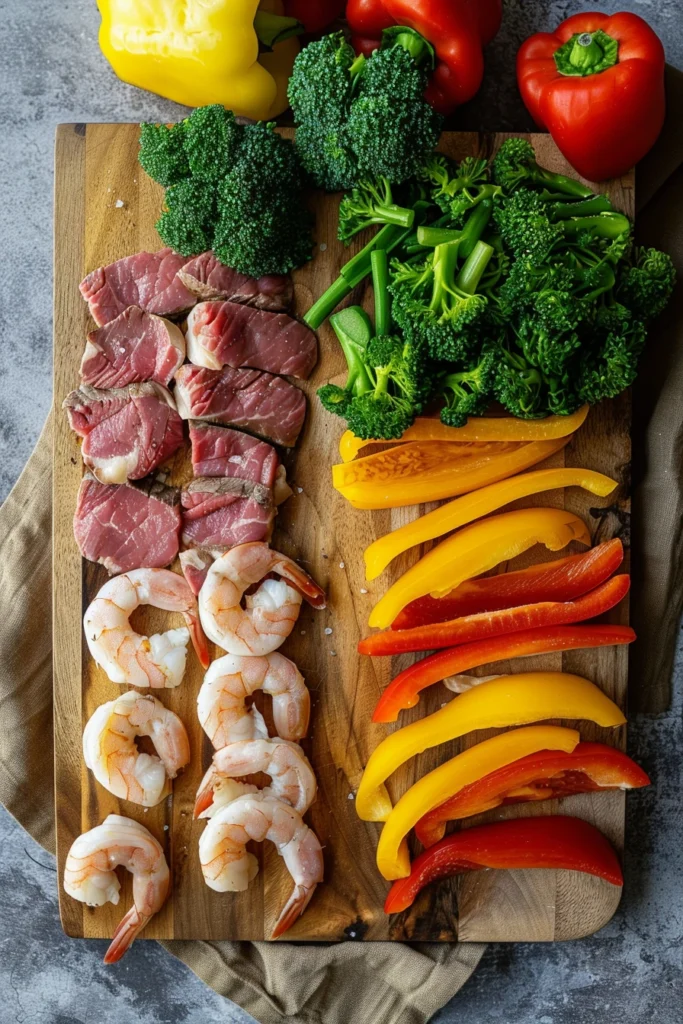
Selecting the right beef cut can completely transform your steak and shrimp stir fry. Because stir-frying relies on intense heat and fast cooking, you want a cut that stays tender even when sliced thin. Flank steak and skirt steak are two of the most reliable options, thanks to their natural grain and rich flavor. Both cook quickly and absorb marinades well, which helps build a deeper, more layered taste in the final dish.
You can also use sirloin, which offers a balance of tenderness and affordability. Sirloin holds up beautifully under high heat, giving you that satisfying sear without becoming chewy. No matter which cut you choose, always slice the beef against the grain. This small detail shortens the muscle fibers and keeps every bite tender, which ultimately makes the stir fry feel more restaurant-quality.
Because stir fry steak cooks in minutes, you’ll want the slices thin—around one-quarter inch. This ensures fast browning and allows the steak to blend seamlessly with shrimp and vegetables instead of dominating the pan. When prepared properly, the beef becomes flavorful, juicy, and perfectly balanced with the rest of the ingredients.
Selecting shrimp sizes and prepping seafood the right way
Shrimp cooks incredibly fast, which is why it plays so well with steaks in a stir fry. Medium or large shrimp (typically labeled 21/25 or 26/30) work best because they keep their shape during high-heat cooking. Smaller shrimp tend to overcook quickly, turning rubbery before the beef even finishes searing.
Before adding shrimp to your steak and shrimp stir fry, pat them completely dry. Excess moisture prevents browning and causes steaming, which can leave the shrimp pale instead of caramelized. Removing the shells and veins also helps them cook evenly and makes the dish easier to eat.
If you want shrimp with extra flavor, marinate them lightly in soy sauce, garlic, and a bit of oil. However, don’t let them sit too long—shrimp absorbs flavor quickly and can become mushy if marinated for more than 10 to 15 minutes. When added to a hot pan, they should curl gently and turn a bright pink in under two minutes. At that point, it’s best to remove them and return them later when the sauce is ready.
Proper preparation ensures that shrimp stay juicy and tender while still picking up the savory, slightly smoky notes that make stir fry such a satisfying weeknight option. When balanced with well-seared steak, vegetables, and sauce, they bring the perfect contrast and freshness to the dish.
When prepping your vegetables and proteins for this steak and shrimp stir fry, you might also enjoy our Cafeteria Noodles Recipe for another quick and tasty stir fry-style dish.
Essential Tools and Techniques for Steak and Shrimp Stir Fry Recipes
Best pans and woks for even, high-heat cooking
When making a steak and shrimp stir fry, the pan you choose directly affects your results. A lightweight carbon steel wok is the classic choice because it heats fast and handles quick temperature changes well. Its sloped sides help you toss ingredients easily and prevent overcrowding, which keeps both steak and shrimp from steaming instead of searing. If you don’t have a wok, a wide stainless-steel skillet or a cast-iron pan works well. These options hold heat steadily, allowing you to build the browning that gives stir fry its signature flavor.
Using a pan that can handle high heat also improves texture. Steak develops deeper caramelization, and shrimp gets that light, crisp edge that keeps it juicy inside. No matter the pan, make sure it’s fully heated before adding anything. Preheating creates the sear that locks in moisture and enhances every ingredient, including vegetables and sauce.
Another detail worth mentioning is spacing. Even with a good pan, adding too much at once lowers the temperature. Stir fry depends on heat, movement, and fast reactions, so work in batches when needed. This simple technique ensures your stir fry has the bold, smoky flavor it’s meant to have.
Slicing, marinating, and seasoning techniques for layered flavor
Proper preparation makes your steak and shrimp stir fry taste polished and balanced. Start by slicing vegetables into uniform sizes so they cook at the same rate. Bell peppers, onions, snap peas, and carrots all benefit from being cut into thin strips, which keeps them crisp-tender during high-heat cooking.
As for steak, marinating it helps the meat stay tender and flavorful. A blend of soy sauce, garlic, ginger, and a touch of oil works well. Marinating for at least 20 to 30 minutes gives the meat enough time to absorb flavor without breaking down. If you’re adding cornstarch, do so at the end of the marinating process to create a light coating that thickens the sauce naturally.
Shrimp need a gentler approach. Because they tenderize quickly, a brief marinade or simple seasoning is often enough. A mix of salt, pepper, and a quick splash of citrus or soy keeps the flavor bright without overpowering.
Once everything is prepped, cooking becomes almost effortless. Begin with steak, build the sear, remove it, then cook shrimp briefly. After that, vegetables enter the pan, followed by the sauce and the return of the proteins. This sequence ensures every piece keeps its ideal texture and flavor, making the final dish harmonious and satisfying.
Step-by-Step Guide: How to Make Steak and Shrimp Stir Fry at Home
1. Prepare Your Ingredients
- Steak: Slice 1 lb of flank steak thinly against the grain (about ¼ inch thick) for tenderness.
- Shrimp: Peel, devein, and pat dry 1 lb of shrimp. Remove excess moisture to ensure proper searing.
- Vegetables: Wash and cut your choice of vegetables (bell peppers, broccoli, carrots, snap peas) into thin, uniform strips.
- Sauce: In a small bowl, whisk together soy sauce (or tamari), cornstarch, brown sugar or honey, sesame oil, rice vinegar, garlic, and ginger. Set aside.
2. Marinate the Proteins
- Steak: Combine sliced steak with 1–2 tbsp soy sauce, 1 tsp minced garlic, and 1 tsp grated ginger. Let it marinate for 20–30 minutes.
- Shrimp (optional): Lightly season with salt, pepper, and a splash of soy sauce or citrus juice for 10 minutes. Avoid over-marinating.
3. Cook the Steak
- Heat 1 tbsp vegetable or sesame oil in a wok or large skillet over high heat.
- Add the steak slices in a single layer — avoid overcrowding.
- Sear for 1–2 minutes per side until nicely browned.
- Remove steak from the pan and set aside.
4. Cook the Shrimp
- In the same pan, add 1 tbsp oil if needed.
- Cook the shrimp for 1–2 minutes per side until they turn pink and opaque.
- Remove shrimp and set aside.
5. Stir-Fry the Vegetables
- Add remaining oil to the pan.
- Begin with harder vegetables like carrots and broccoli; stir-fry for 2–3 minutes.
- Add quicker-cooking vegetables like bell peppers and snap peas; stir-fry another 2 minutes.
- Stir constantly to maintain crisp-tender texture.
6. Combine Proteins and Sauce
Cook for 1–2 minutes until the sauce thickens and everything is heated through.
Return steak and shrimp to the pan with the vegetables.
Pour the prepared sauce over everything.
Toss well to coat all ingredients evenly.
Best Sauces for Steak and Shrimp Stir Fry
Savory soy-based sauces for umami richness
A great sauce is the heart of any steak and shrimp stir fry, and soy-based blends are among the most reliable options. They create deep umami flavor that pairs perfectly with both steak and seafood. A traditional stir fry sauce usually starts with soy sauce, garlic, ginger, and a touch of brown sugar or honey. This combination balances salty, sweet, and aromatic notes, giving the dish a rich, layered taste.
Adding rice vinegar or mirin brightens the sauce, while sesame oil introduces a warm, toasted aroma that ties everything together. Cornstarch is another important ingredient; it thickens the sauce so it clings to the steak, shrimp, and vegetables instead of pooling at the bottom of the pan. When heated, the sauce becomes glossy and silky, coating each bite with savory depth.
You can also use low-sodium soy sauce if you prefer a lighter salt profile, or swap in tamari for a gluten-free option. Small adjustments like these allow you to customize the flavor while keeping the dish balanced and satisfying. Because both steak and shrimp absorb sauce quickly, a well-prepared blend elevates the entire meal from simple to memorable.
Sweet, spicy, or citrus sauces to elevate flavor
If you enjoy bolder flavors, sweet, spicy, or citrus-based sauces can transform your steak and shrimp stir fry into something unique. A sweet-and-spicy option might use chili paste, honey, garlic, and soy sauce for a sticky glaze with a little heat. This works especially well when you want a vibrant, punchy flavor that stands out without overpowering the proteins.
For a citrus-forward sauce, fresh orange or lemon adds brightness that complements shrimp beautifully while cutting through the richness of the steak. Combining citrus juice with ginger, garlic, soy, and a little sugar creates a refreshing balance that feels lighter but still full of flavor. These sauces also pair well with vegetables like snap peas, bell peppers, and broccoli, helping the whole dish feel harmonious.
Another popular direction is a peppery, spicy stir fry sauce made with chili flakes, sriracha, or hot sesame oil. The spice adds depth and warmth, making every bite comforting and energizing. Whether you pick sweet, spicy, citrusy, or a combination of all three, the sauce remains the signature element that shapes the personality of your stir fry.
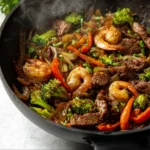
Steak and Shrimp Stir Fry
- Total Time: 30 minutes
Ingredients
For the proteins:
1 lb flank steak, thinly sliced against the grain
1 lb shrimp, peeled and deveined
For the vegetables:
1 cup bell peppers, thinly sliced
1 cup broccoli florets
1 cup carrots, thinly sliced
1 cup snap peas or snow peas
1/2 cup mushrooms (optional)
For the sauce:
3 tbsp soy sauce (or tamari for gluten-free)
1 tbsp cornstarch
1 tbsp brown sugar or honey
2 tsp sesame oil
1 tbsp rice vinegar
2 cloves garlic, minced
1 tsp fresh ginger, grated
1/4 tsp crushed red pepper flakes (optional)
For cooking:
2–3 tbsp vegetable oil (or high-heat oil)
Instructions
Prep ingredients: Slice steak thinly, peel and devein shrimp, chop vegetables. Set aside.
Marinate steak: Combine steak with 1 tbsp soy sauce, garlic, and ginger. Let sit 20–30 minutes. Optional: lightly marinate shrimp for 10 minutes.
Make sauce: In a small bowl, whisk remaining soy sauce, cornstarch, brown sugar, sesame oil, rice vinegar, garlic, ginger, and crushed red pepper. Set aside.
Cook steak: Heat 1 tbsp oil in a wok or large skillet over high heat. Add steak in a single layer. Sear 1–2 minutes per side until browned. Remove and set aside.
Cook shrimp: Add 1 tbsp oil to the pan. Sauté shrimp 1–2 minutes until pink and just cooked. Remove and set aside.
Cook vegetables: Add remaining oil, stir-fry vegetables starting with carrots and broccoli, then add bell peppers, snap peas, and mushrooms. Stir constantly for 3–4 minutes until crisp-tender.
Combine: Return steak and shrimp to the pan. Pour in sauce, tossing to coat evenly. Cook 1–2 more minutes until sauce thickens.
Serve: Plate over steamed rice, noodles, or cauliflower rice. Garnish with sesame seeds or sliced green onions if desired. Serve immediately.
Notes
Slice steak against the grain for maximum tenderness.
Do not overcrowd the pan — cook in batches if necessary to ensure proper searing.
Use high heat for best stir-fry results and crisp vegetables.
Customize sauce: add citrus juice, chili paste, or peanut butter for fusion flavors.
- Prep Time: 15 minutes
- Cook Time: 15 minutes
Nutrition
- Serving Size: 4
- Calories: 420 kcal
- Fat: 20g
- Carbohydrates: 18g
- Fiber: 3g
- Protein: 38g
How to Store Leftover Steak and Shrimp Stir Fry
Refrigerating tips to keep your stir fry fresh
Proper storage helps your steak and shrimp stir fry stay safe and delicious for the next day. After cooking, allow the stir fry to cool slightly—not more than 30 minutes at room temperature—so condensation doesn’t make the vegetables soggy. Once cooled, transfer everything into an airtight container. This helps maintain texture and prevents the flavors from becoming dull.
Store the container in the refrigerator for up to 3 days. Because shrimp is delicate and steak tends to dry out over time, it’s best to eat the leftovers sooner rather than later for the best taste. When reheating, warm it gently on the stovetop over medium heat or microwave it in short intervals. Adding a splash of water or a teaspoon of soy sauce helps revive moisture and keeps the flavors vibrant.
Keeping your stir fry properly sealed also prevents it from absorbing odors from the fridge. This is especially helpful if you have strong-smelling foods stored nearby. With the right technique, your leftovers will taste almost as good as the freshly cooked version, making this meal a convenient option for busy days.
Can you freeze steak and shrimp stir fry?
Freezing steak and shrimp stir fry is possible, but the texture changes depending on the ingredients. Shrimp freezes fairly well, but it can become slightly rubbery when reheated. Steak usually holds up better, though it may turn a bit firmer. Vegetables like broccoli, peppers, and snow peas generally freeze with decent results, but they may lose some crunch once thawed.
If you choose to freeze it, divide the stir fry into smaller portions and place them in freezer-safe containers or heavy-duty freezer bags. Remove as much air as possible to prevent freezer burn, which can affect both taste and texture. Frozen stir fry lasts up to 2 months.
To reheat, thaw it in the refrigerator overnight, then warm it on the stovetop until heated through. Avoid microwaving from frozen, as it can cause uneven heating and make the vegetables mushy. While fresh is always best, freezing can be a useful option if you cooked a larger batch or want a quick meal ready for later.
FAQs about Steak and Shrimp Stir Fry
Can I use frozen shrimp for steak and shrimp stir fry?
Yes — you can use frozen shrimp, but thaw them completely and pat them dry before cooking. Moisture from unthawed or wet shrimp can cause steaming rather than searing, which reduces flavor and gives a soggy texture.
What cut of steak works best for stir fry?
Best cuts are ones that become tender quickly when sliced thin. Flank steak, sirloin, and skirt steak are among the most recommended for stir fry. Flank steak is popular because when sliced against the grain, it stays flavorful and tender.
How do I avoid overcooking shrimp or steak in stir fry?
The key is timing and cooking order. Shrimp cooks very fast — usually 2 to 3 minutes until it’s pink and opaque. Steak slices sear best when thin and cooked quickly on high heat. Cook each protein separately, then combine at the end. Overcrowding the pan or low heat often leads to overcooking or soggy results.
Can I make steak and shrimp stir fry ahead of time or store leftovers?
You can prep ingredients (slice steak, peel shrimp, chop veggies) ahead of time, but it’s best to cook proteins just before serving for optimal texture and flavor. As for leftovers, storing in an airtight container in the fridge works; aim to eat within 2–3 days. Reheat gently to preserve moisture.
Can I make a gluten‑free version of steak and shrimp stir fry?
Yes. Substitute regular soy sauce with a gluten-free alternative (like tamari). Many stir fry recipes are flexible, and switching to tamari keeps the savory depth while avoiding gluten.
What are good sides to serve with steak and shrimp stir fry?
Classic pairings include steamed rice (white, brown, jasmine, or basmati), rice noodles, or even cauliflower rice for a lower-carb option. For vegetables, steamed or sautéed greens (like broccoli or bok choy), a crisp salad, or simple stir-fried veggies make great companions — balancing richness with freshness.
Find more delicious recipes on DifferentyRecipes Pinterest, and stay inspired with the newest tips and ideas by following DifferentyRecipes on Facebook.
Final Thoughts on Making the Best Steak and Shrimp Stir Fry at Home
Steak and shrimp stir fry is a brilliant choice for home cooks who want a fast, flexible, and delicious meal. With the right steak cut, properly prepped shrimp, crisp vegetables, and a well‑balanced sauce, you can create a restaurant‑quality surf‑and‑turf dish in under 30 minutes. Because the recipe adapts easily — whether you’re gluten‑free, low-carb, or just looking for a quick dinner — it earns a permanent spot in your go-to meal rotation. Give it a try soon, and don’t be afraid to experiment with sauces, veggies, or serving styles to make it your own perfect dinner.