If you’ve ever dreamed of capturing the bold flavors of New Orleans without the fuss of multiple pots and pans, then this One Pot Jambalaya is your culinary jackpot. Imagine succulent shrimp, tender chicken, and flavorful sausage all simmered together with rice and spices in one comforting pot. No juggling multiple dishes, no cleanup nightmare—just pure, hearty goodness that will have your family asking for seconds.
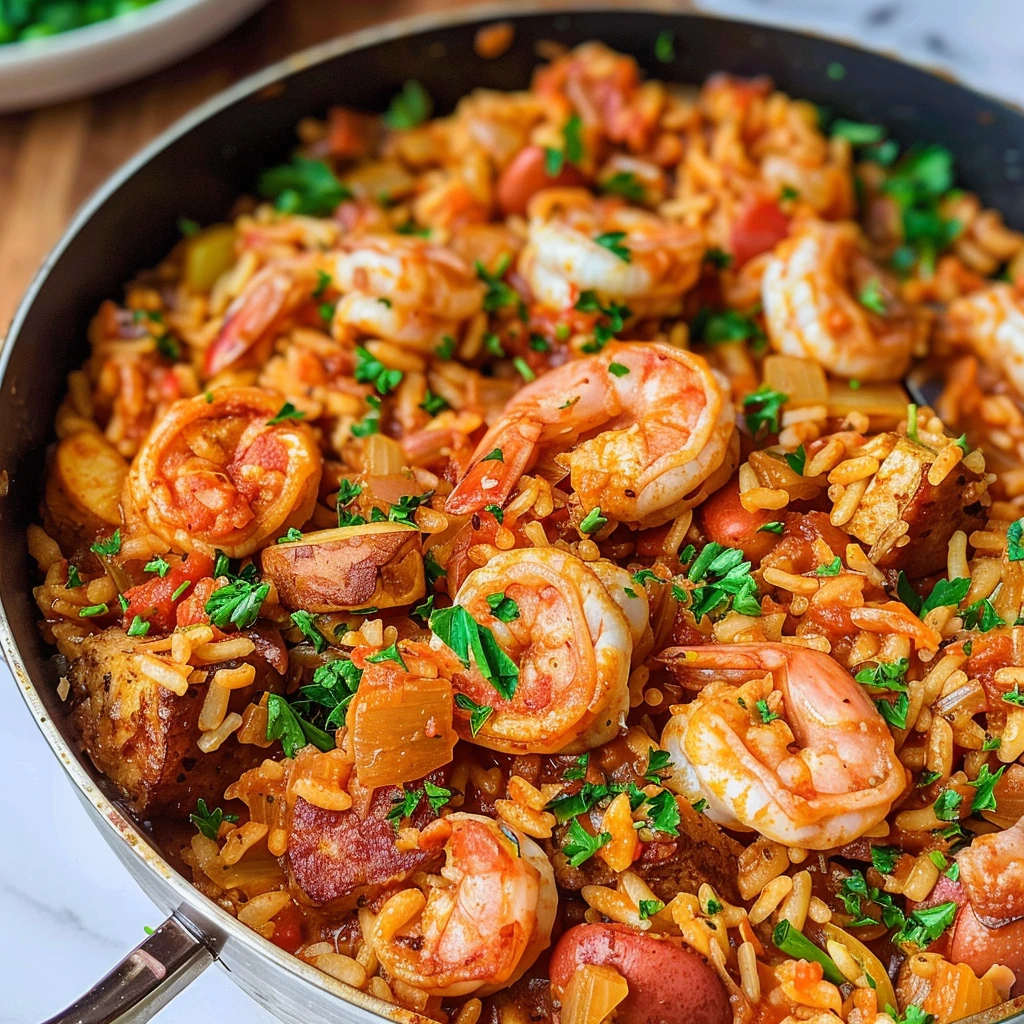
Table of Contents
What Is One Pot Jambalaya?
One Pot Jambalaya is a classic Louisiana dish that combines rice, protein, and vegetables in a single pot. Traditionally, jambalaya can be either Creole (with tomatoes) or Cajun (without tomatoes), but the one-pot method simplifies cooking while retaining those bold flavors. Using just one pot ensures the rice absorbs all the spices, meats, and juices, giving you a perfect, flavorful consistency every time.
Ingredients You’ll Need for One Pot Jambalaya
The secret to a perfect One Pot Jambalaya is starting with fresh, high-quality ingredients. Each component plays a key role in creating the bold, layered flavors this classic Louisiana dish is famous for. Below, we’ve broken down the ingredients into proteins, vegetables, rice, spices, and optional garnishes, along with exact measurements for easy reference.
Why These Ingredients Matter
- Proteins: Chicken, shrimp, and sausage provide a balance of textures and rich flavors. Chicken offers tenderness, shrimp gives a seafood twist, and sausage adds a smoky, savory depth.
- Vegetables (The Holy Trinity): Onions, celery, and bell peppers are the foundation of Cajun and Creole cooking. They create an aromatic base that infuses the dish with sweetness and complexity.
- Rice: Long-grain rice absorbs all the juices and spices without turning mushy. It acts as the canvas for the flavorful sauce.
- Spices and Herbs: Paprika, cayenne, thyme, and oregano give jambalaya its signature warmth, while bay leaves add subtle depth.
- Liquids: Chicken broth keeps the rice perfectly tender and helps all the flavors meld together. Diced tomatoes are optional for a Creole-style variation.
Ingredients Table
| Category | Ingredient | Measurement | Notes / Tips |
|---|---|---|---|
| Proteins | Chicken thighs (boneless, skinless) | 1 lb, cut into bite-sized pieces | Choose fresh for best texture |
| Shrimp (peeled & deveined) | 1 lb | Medium size works best | |
| Chicken sausage | 8 oz, sliced ½-inch thick | Use spicy or smoked for extra flavor | |
| Vegetables & Aromatics | Bell peppers (red, yellow, or green) | 1 cup, diced | Adds sweetness and color |
| Celery | 1 cup, diced | Part of the “Holy Trinity” | |
| Onion | 1 medium, diced | Yellow or white onion works best | |
| Garlic | 3 cloves, minced | Adds aromatic depth | |
| Green onions (optional, for garnish) | 2 tbsp, chopped | Brightens flavors | |
| Rice & Liquid | Long-grain white rice | 1 ½ cups | Absorbs flavors without becoming mushy |
| Chicken broth | 3 cups | Can substitute vegetable broth if desired | |
| Diced tomatoes (optional) | 1 cup, drained | Use for Creole-style jambalaya | |
| Spices & Seasonings | Paprika | 1 tsp | Adds color and mild smokiness |
| Cayenne pepper | ¼ tsp (adjust to taste) | Adds heat | |
| Thyme (dried) | 1 tsp | Earthy flavor | |
| Oregano (dried) | 1 tsp | Enhances depth | |
| Salt | 1 tsp (adjust to taste) | Brings out all flavors | |
| Black pepper | ½ tsp | Freshly ground recommended | |
| Bay leaf | 1 | Remove before serving | |
| Optional Garnishes | Fresh parsley | 2 tbsp, chopped | Adds freshness and color |
| Lemon wedges | As desired | Adds a bright, citrusy note |
Step-by-Step Cooking Process for One Pot Jambalaya
Cooking One Pot Jambalaya may sound intimidating, but by following these step-by-step instructions, you’ll achieve a restaurant-quality dish without the fuss. The key is preparing ingredients properly, layering flavors, and timing each step for maximum taste.
Step 1: Prepare Your Ingredients
Before you turn on the stove, gather and prep everything.
- Chicken: Cut boneless, skinless chicken thighs into bite-sized pieces.
- Sausage: Slice chicken sausage into ½-inch rounds.
- Shrimp: Peel and devein. Pat dry with paper towels.
- Vegetables: Dice onions, celery, and bell peppers. Mince garlic.
- Rice & Liquids: Measure rice and broth. Drain diced tomatoes if using.
Step 2: Sauté the Meats
- Heat 1–2 tablespoons of vegetable oil in a heavy-bottomed pot or Dutch oven over medium-high heat.
- Add chicken pieces and cook for 5–6 minutes, turning occasionally, until lightly browned but not fully cooked.
- Add sausage slices and sauté for 2–3 minutes until they release their oils and become fragrant.
- Remove chicken and sausage from the pot and set aside.
Step 3: Cook the Vegetables (The Holy Trinity)
- In the same pot, add a touch more oil if needed.
- Add diced onions, celery, and bell peppers. Cook for 4–5 minutes until soft and fragrant.
- Add minced garlic and sauté for an additional 30 seconds to release aroma.
Step 4: Toast the Rice
- Add 1 ½ cups of long-grain rice to the pot. Stir well for 1–2 minutes.
- Toasting the rice lightly enhances its nutty flavor and helps it absorb the liquid evenly.
Step 5: Add Liquids and Spices
- Pour in 3 cups of chicken broth (or vegetable broth) and 1 cup of drained diced tomatoes if making Creole-style jambalaya.
- Stir in paprika, cayenne, thyme, oregano, salt, and black pepper. Add the bay leaf.
- Mix thoroughly, scraping the bottom of the pot to lift any flavorful bits left from sautéing.
Step 6: Simmer the Jambalaya
- Return the chicken and sausage to the pot. Stir gently to combine.
- Reduce heat to low, cover, and simmer for 15–20 minutes, or until rice is tender but not mushy.
- Avoid lifting the lid too often, as steam helps cook the rice evenly.
Step 7: Add Shrimp
- Once the rice is nearly cooked, stir in the shrimp.
- Cover and cook for 3–5 minutes until shrimp turn pink and opaque.
- Remove from heat immediately to prevent overcooking.
Step 8: Finish and Garnish
- Remove the bay leaf.
- Fluff the jambalaya gently with a fork.
- Garnish with chopped fresh parsley and serve with lemon wedges if desired.
Step 9: Serve and Enjoy
Scoop the One Pot Jambalaya onto plates, and pair with simple sides like a green salad or crusty bread. Each bite should have a perfect balance of rice, vegetables, chicken, sausage, and shrimp, bursting with savory, slightly spicy flavor.
PART 4: Cooking Tips and Variations for One Pot Jambalaya
A great One Pot Jambalaya isn’t just about following a recipe—it’s about knowing how to tweak it, add variations, and serve it in a way that maximizes flavor. Here’s a detailed guide to elevate your dish.
Tips for Perfect One Pot Jambalaya
1. Choose the Right Pot
- Use a heavy-bottomed pot or Dutch oven. It distributes heat evenly and prevents rice from sticking or burning.
- Avoid thin pans; they can cause uneven cooking and scorching at the bottom.
2. Layer Flavors Strategically
- Brown the meats first. This creates caramelized bits that add depth to the dish.
- Sauté vegetables afterward to build a flavorful base.
3. Control the Spice Level
- Start with moderate cayenne and paprika. Taste at the end and adjust if needed.
- Remember, jambalaya should have a warm kick, not overpowering heat.
4. Don’t Overcook the Rice or Shrimp
- Check rice consistency after 15–20 minutes of simmering. It should be tender, not mushy.
- Add shrimp last; overcooking will make them rubbery.
5. Use Fresh Ingredients Whenever Possible
- Fresh herbs, vegetables, and proteins give a more vibrant flavor than pre-packaged or frozen alternatives.
Delicious Variations of One Pot Jambalaya
1. Low-Carb Cauliflower Rice Jambalaya
- Swap regular rice with cauliflower rice.
- Reduce the cooking time to 5–7 minutes once the cauliflower is added.
- Ideal for keto or low-carb diets.
2. Vegetarian One Pot Jambalaya
- Replace chicken, shrimp, and sausage with plant-based sausage or extra vegetables like zucchini, mushrooms, and bell peppers.
- Use vegetable broth for a fully vegetarian version.
3. Extra Spicy Cajun Jambalaya
- Add extra cayenne or a dash of hot sauce.
- Finish with chopped jalapeños for a smoky, spicy punch.
4. Creole-Style Jambalaya
- Include diced tomatoes and a pinch of sugar to balance acidity.
- Provides a slightly tangy, rich flavor distinct from traditional Cajun jambalaya.
Frequently Asked Questions About One Pot Jambalaya
Cooking One Pot Jambalaya can raise a few common questions, especially for beginners. Here’s a curated list of FAQs with clear answers to help you master this classic dish with confidence.
1. Can I make One Pot Jambalaya ahead of time?
Yes! One Pot Jambalaya actually tastes even better the next day. The flavors have time to meld, creating a richer and more harmonious taste. Store the cooked jambalaya in an airtight container in the refrigerator for up to four days. For longer storage, freeze it for up to three months. When reheating, add a splash of chicken or vegetable broth to keep the rice moist and the proteins tender.
2. Can I use different types of rice for One Pot Jambalaya?
Absolutely. Long-grain white rice is traditional because it absorbs flavors well and remains separate when cooked. However, you can also use brown rice or jasmine rice if you prefer. Keep in mind that brown rice may require additional cooking time and more liquid, while jasmine rice cooks faster and releases more aroma. For a low-carb option, cauliflower rice works beautifully, though it should be added later in the cooking process to prevent overcooking.
3. Can I make a vegetarian version of One Pot Jambalaya?
Yes! A vegetarian or plant-based version is simple. Replace the chicken, shrimp, and sausage with plant-based sausage, extra vegetables, or mushrooms. Use vegetable broth instead of chicken broth to maintain depth of flavor. You can also experiment with beans like kidney beans or chickpeas to add protein and make the dish more hearty. This variation still delivers the bold, spicy, and savory flavors that make jambalaya a classic.
4. How can I adjust the spice level in One Pot Jambalaya?
The spice level in jambalaya is fully customizable. Start with ¼ teaspoon of cayenne pepper and taste as you go. If you prefer a milder version, reduce the cayenne or omit it entirely. For extra heat, add diced jalapeños, smoked paprika, or a few dashes of hot sauce at the end of cooking. Remember, it’s always easier to add more spice than to remove it, so adjust gradually.
5. Can I make One Pot Jambalaya in an Instant Pot or slow cooker?
Yes! Instant Pot Jambalaya is quick and convenient. Brown the proteins using the sauté function, then add vegetables, rice, liquid, and spices. Cook on high pressure for 8–10 minutes, followed by a natural release. For a slow cooker, sauté meats and vegetables first, then add the remaining ingredients and cook on low for 4–5 hours. Just add shrimp during the last 10–15 minutes to prevent overcooking.
6. What should I serve with One Pot Jambalaya?
Serve your jambalaya with light, complementary sides. Fresh green salads, steamed vegetables, or crusty bread pair perfectly. Garnishing with parsley and a lemon wedge brightens flavors and adds visual appeal. Non-alcoholic drinks like iced tea, lemonade, or sparkling apple cider make excellent beverage choices for a family-friendly meal.
Print
One Pot Jambalaya: The Ultimate Dinner Recipe for Busy Nights
- Total Time: 50 minutes
Description
This One Pot Jambalaya is a quick and flavorful meal packed with chicken, shrimp, sausage, rice, and colorful vegetables. With bold Cajun spices and minimal cleanup, it’s perfect for weeknight dinners, family meals, or meal prep.
Ingredients
1 lb (450 g) chicken thighs, diced
1 lb (450 g) shrimp, peeled and deveined
8 oz (225 g) chicken or turkey sausage, sliced
1 ½ cups long-grain rice
1 medium onion, diced
2 cups bell peppers (red and green), diced
1 cup celery, diced
3 cloves garlic, minced
1 cup diced tomatoes (canned)
3 cups chicken broth
2 tbsp olive oil or butter
1 tsp paprika
¼–½ tsp cayenne pepper (adjust to taste)
1 tsp dried thyme
1 tsp salt (or to taste)
½ tsp black pepper
2 tbsp fresh parsley, chopped (for garnish)
Lemon wedges (optional, for garnish)
Instructions
Heat olive oil in a large heavy-bottomed pot over medium heat. Brown chicken and sausage until golden. Remove and set aside.
In the same pot, sauté onions, bell peppers, celery, and garlic until softened and fragrant.
Add rice and toast for 1–2 minutes, stirring to coat with oil and vegetables.
Pour in chicken broth and diced tomatoes, then add paprika, cayenne, thyme, salt, and pepper. Stir well.
Return chicken and sausage to the pot. Bring to a boil, reduce heat, cover, and simmer for 20–25 minutes until rice is tender.
Add shrimp during the last 5 minutes of cooking. Cook until shrimp turn pink and opaque.
Remove from heat, fluff rice, and garnish with parsley and lemon wedges. Serve hot.
Notes
Prep ahead: Dice vegetables and proteins in advance for faster cooking.
Don’t overcook shrimp: Add shrimp last to keep them tender and juicy.
Spice control: Adjust cayenne or hot sauce to your preferred heat level.
Extra flavor: Browning meats first adds a deeper, savory taste to the jambalaya.
Leftovers: Store in an airtight container in the fridge for up to 4 days. Reheat with a splash of broth to keep rice moist.
- Prep Time: 15 minutes
- Cook Time: 35 minutes
Nutrition
- Serving Size: 6
Troubleshooting Common Mistakes in One Pot Jambalaya
Even with a great recipe, cooking One Pot Jambalaya can sometimes come with small challenges. Understanding the most common mistakes and how to fix them will save time and help you achieve a perfectly flavorful dish every time.
One of the most frequent issues is overcooked or mushy rice. This usually happens if the heat is too high or the rice is stirred too much while simmering. To prevent this, cook the rice over low heat and avoid stirring until it’s almost done. Using a heavy-bottomed pot also helps distribute heat evenly, preventing scorching or sticking. If the rice ends up slightly overcooked, try adding a splash of broth and gently fluffing it—it can bring back some texture.
Another common problem is bland flavor. Jambalaya is all about layering tastes, so skipping steps like browning the meat or sautéing the vegetables can result in a lackluster dish. To enhance flavor, always brown chicken and sausage first, then cook your vegetables until soft and aromatic. Season generously and taste as you go, adjusting salt, pepper, and spices to suit your preferences. Adding fresh herbs like parsley at the end brightens the dish and balances the richness.
Overcooked or rubbery shrimp is another pitfall. Shrimp cooks quickly, usually in 3–5 minutes, so add it at the very end of the cooking process. Cover the pot for a few minutes, then remove from heat as soon as the shrimp turns pink and opaque. Overcooking shrimp can ruin the texture of an otherwise perfect jambalaya, so timing is key.
Sometimes, the dish can be too spicy or not spicy enough. Adjust the heat gradually. Start with ¼ teaspoon cayenne or paprika and increase slowly as needed. For extra heat, diced jalapeños or a dash of hot sauce works well, but always taste first. For milder versions, you can skip the cayenne entirely and rely on smoked paprika and herbs for depth.
Lastly, liquid imbalance can make or break your One Pot Jambalaya. Too little broth will leave the rice undercooked, while too much can make it mushy. Stick to the recommended 3 cups of chicken or vegetable broth for 1 ½ cups of rice. Adjust slightly depending on the type of rice used, and always check consistency before adding the shrimp.
By being mindful of these common mistakes and following these tips, cooking One Pot Jambalaya becomes a smooth, enjoyable experience, whether you’re making it for a weeknight dinner or a special gathering. You’ll gain confidence in the kitchen and be able to serve a flavorful, perfectly textured dish every time.
Storage, Reheating, and Meal Prep Tips for One Pot Jambalaya
One Pot Jambalaya is not only delicious fresh but also great for meal prep and leftovers. Knowing how to store and reheat it properly ensures that every bite remains flavorful and perfectly textured.
Storage Tips
- Refrigeration: Place leftover jambalaya in airtight containers and store in the fridge for up to 4 days.
- Freezing: For longer storage, divide into individual portions and freeze for up to 3 months. Label containers with the date for easy tracking.
- Portioning: Freeze in single-serving portions for quick weekday lunches or dinners. This helps avoid reheating the entire batch.
Reheating Tips
- Stovetop: Add a splash of chicken or vegetable broth to prevent the rice from drying out. Heat gently over medium-low heat, stirring occasionally.
- Microwave: Cover with a microwave-safe lid and add a tablespoon of broth per serving. Heat in 1–2 minute intervals, stirring in between.
- Oven (for large batches): Place in an oven-safe dish, cover with foil, and bake at 350°F (175°C) for 15–20 minutes, adding a little broth if necessary.
Meal Prep Tips
- Make-Ahead Proteins: Brown chicken and sausage in advance and store separately. This shortens cooking time on the day you serve.
- Vegetables Prep: Dice bell peppers, onions, and celery ahead of time and store in sealed containers. They stay fresh for 2–3 days in the fridge.
- Freeze Individual Meals: Assemble single-portion containers with rice, proteins, and vegetables (without shrimp). Freeze, then add shrimp during final reheating to keep it tender.
Extra Tips for Maintaining Flavor
- Fluff the rice gently before serving to avoid clumping.
- Garnish with fresh parsley or green onions to revive color and freshness, especially after reheating.
- Add a squeeze of lemon for brightness and balanced flavor, even with leftovers.
By following these tips, One Pot Jambalaya can easily become a go-to meal for busy weeks, batch cooking, or family gatherings, without sacrificing taste or texture. Proper storage and reheating ensure each serving is as delicious as when freshly cooked.
Conclusion
Cooking One Pot Jambalaya is both satisfying and versatile. With a few simple steps, careful preparation, and attention to flavor, you can create a dish that’s hearty, comforting, and bursting with classic Cajun-inspired taste. From browning your proteins to perfectly seasoning the rice, every step contributes to a dish that’s both delicious and visually appealing.