
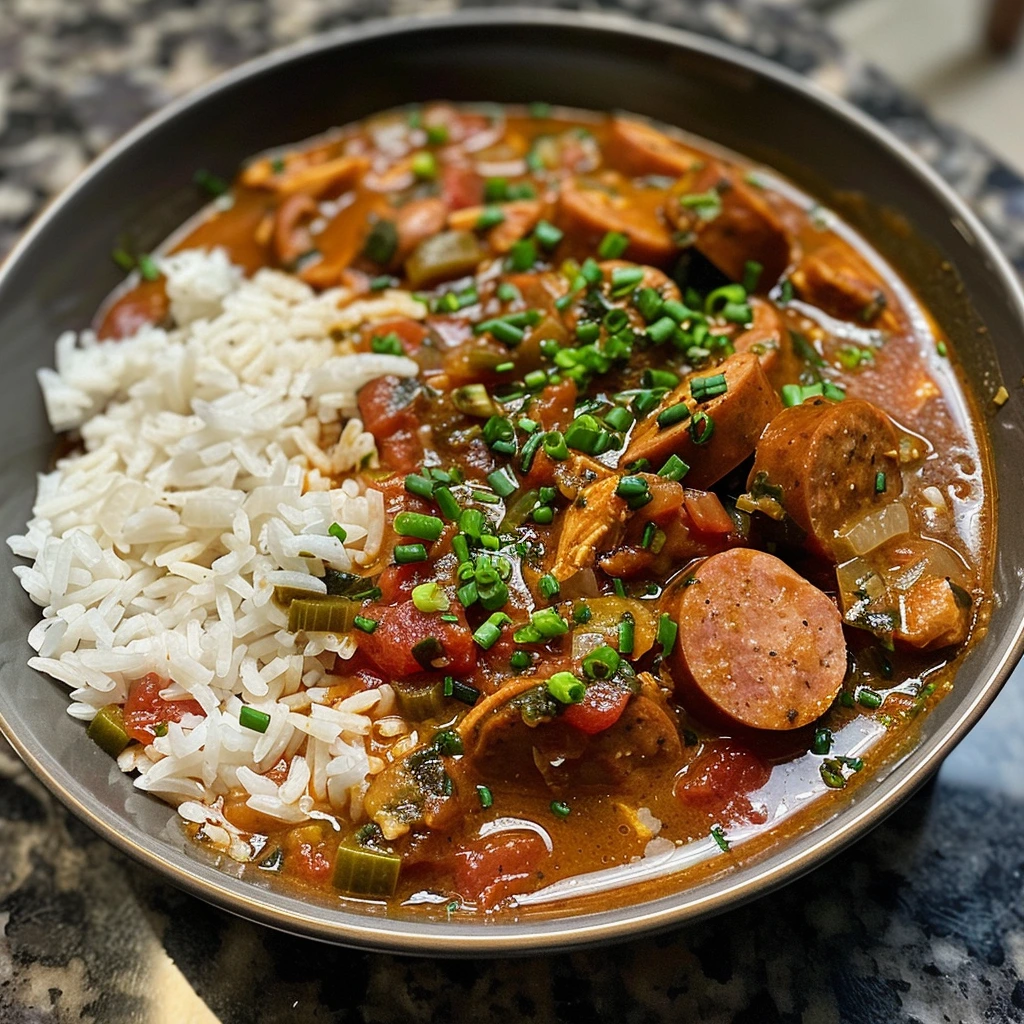
Cajun Sausage and Chicken Gumbo is one of those dishes that doesn’t rush you, and honestly, it shouldn’t. From the first stir of the roux to the last spoonful over warm rice, this recipe tells a story of patience, comfort, and deep Southern flavor. While it may look like a pot of chaos at first, everything settles into something rich and familiar, almost like it knows where it’s going before you do.
What Makes Cajun Sausage and Chicken Gumbo So Special
The Roots of Cajun Sausage and Chicken Gumbo in Louisiana
Cajun Sausage and Chicken Gumbo didn’t come from fancy kitchens or polished cookbooks, but instead grew out of necessity and creativity. Originally, Cajun families used what they had on hand, which often meant chicken, local vegetables, and preserved sausage alternatives made from beef or poultry. Over time, this practical approach shaped what we now recognize as a classic Cajun gumbo recipe.
Because Cajun cooking values depth over speed, gumbo became a slow-simmered dish meant to feed families and neighbors alike. While many Southern recipes rely on exact measurements, gumbo leans more on instinct, which is why it feels both comforting and personal. As a result, Cajun Sausage and Chicken Gumbo remains deeply rooted in tradition while still welcoming small changes.
Cajun Sausage and Chicken Gumbo Ingredients Explained
Choosing the Right Chicken and Sausage Alternatives
Cajun Sausage and Chicken Gumbo relies on simple ingredients that slowly build big flavor, so starting with the right proteins makes all the difference. Chicken thighs are the top choice because they stay tender and juicy during simmering. Chicken breasts can be used as well, although they need a little more attention so they don’t dry out. Either option works, as long as the chicken is cut into even, bite-sized pieces for consistent cooking.
For the sausage component, beef sausage, chicken sausage, or turkey sausage are all excellent and safe alternatives. Beef sausage gives Cajun Sausage and Chicken Gumbo a deeper, smokier taste, while chicken or turkey sausage keeps the dish lighter without losing that classic gumbo feel. Whichever you choose, look for sausage that is already seasoned in a Cajun style, since those spices gently infuse the broth as it cooks.
Vegetables, Spices, and Pantry Staples That Build Flavor
Once the proteins are set, the vegetables and seasonings take center stage. The Cajun holy trinity of onion, bell pepper, and celery forms the base of Cajun Sausage and Chicken Gumbo, creating a savory foundation that feels both rich and balanced. Garlic follows closely, while spices like paprika, cayenne, thyme, and bay leaves bring warmth and depth without overpowering the dish.
To make everything easy to follow, here is a clear ingredient table that reflects a traditional yet approachable Cajun Sausage and Chicken Gumbo recipe using USA-standard measurements.
| Ingredient | Amount | Notes |
|---|---|---|
| Chicken thighs or breasts | 1½ pounds | Cut into bite-sized pieces |
| Beef, chicken, or turkey sausage | 12 ounces | Sliced, fully cooked |
| Yellow onion | 1 large | Finely chopped |
| Green bell pepper | 1 large | Chopped |
| Celery stalks | 2 | Chopped |
| Garlic cloves | 4 | Minced |
| All-purpose flour | ½ cup | For the roux |
| Vegetable oil or butter | ½ cup | Roux base |
| Chicken broth | 6 cups | Low sodium preferred |
| Paprika | 2 teaspoons | Adds warmth |
| Cajun seasoning | 1½ teaspoons | Adjust to taste |
| Dried thyme | 1 teaspoon | Earthy flavor |
| Bay leaves | 2 | Remove before serving |
| Cayenne pepper | ¼ teaspoon | Optional heat |
| Okra (optional) | 1 cup | Thickens the gumbo |
| Salt and black pepper | To taste | Adjust near the end |
| Cooked white rice | For serving | Long-grain works best |
Because each ingredient plays a clear role, Cajun Sausage and Chicken Gumbo comes together in a way that feels intentional rather than complicated. As the pot simmers, these simple components blend into a thick, comforting gumbo that tastes deeply seasoned, balanced, and ready to share.
How to Make Cajun Sausage and Chicken Gumbo Step by Step
Building the Roux Without Stress
The heart of Cajun Sausage and Chicken Gumbo is the roux, and while it gets a lot of attention, it doesn’t need to be intimidating. A roux is simply flour and fat cooked together, yet it sets the tone for the entire gumbo recipe. Start by heating vegetable oil or butter in a heavy-bottomed pot over medium heat. Once warm, gradually whisk in the flour, stirring constantly so it stays smooth.
At first, the roux will look pale and thick, but patience changes everything. As you keep stirring, it slowly shifts from blonde to a warm peanut-butter color, and eventually to a deep caramel shade. This step can take 15 to 25 minutes, depending on heat, so staying nearby matters. Meanwhile, keep the heat steady, because rushing only leads to burning, and burnt roux means starting over. When the roux smells nutty and looks glossy, you’re right where Cajun Sausage and Chicken Gumbo wants you to be.
Simmering Techniques for Deep Cajun Flavor
Once the roux is ready, the cooking pace changes, yet the focus stays sharp. Add the chopped onion, bell pepper, and celery directly into the hot roux, then stir right away. This step cools the roux slightly while letting the vegetables soften and release their sweetness. After a few minutes, stir in the garlic and spices, allowing them to bloom without scorching.
Next, slowly pour in the chicken broth while stirring, which helps prevent lumps and keeps the texture smooth. At this point, add the chicken and sausage alternatives, then bring everything to a gentle simmer. Cajun Sausage and Chicken Gumbo shouldn’t boil hard; instead, it should bubble slowly, letting flavors blend over time. As it simmers, skim excess oil if needed and adjust seasoning gradually. By the end, the gumbo thickens naturally, developing that rich, comforting depth that makes this dish worth the wait.
Best Roux Tips for Cajun Sausage and Chicken Gumbo
Light vs Dark Roux Differences
When making Cajun Sausage and Chicken Gumbo, understanding the color of your roux helps you control both flavor and texture. A light roux thickens well but tastes mild, which works better for sauces than gumbo. On the other hand, a dark roux brings deep, nutty flavor, even though it thickens slightly less. Because gumbo relies on flavor first, most Cajun cooks prefer a medium-dark to dark roux.
As the roux darkens, it becomes more fragile, so constant stirring matters even more. While it may feel tempting to walk away, staying close prevents scorching. Think of it like slow toasting coffee beans; the flavor builds gradually, and timing matters. When the roux reaches a chocolate or deep caramel color, Cajun Sausage and Chicken Gumbo gains that signature depth that sets it apart from ordinary soups.
Common Roux Mistakes and How to Avoid Them
Even experienced cooks slip up when making roux, yet most mistakes are easy to avoid. One common issue is cooking the roux over high heat, which speeds things up but increases the risk of burning. Instead, medium heat offers better control and consistency. Another mistake is stopping the stirring, even briefly, because flour settles quickly and scorches fast.
Using the wrong pot also causes trouble. Thin pans heat unevenly, which leads to hot spots. A heavy-bottomed pot distributes heat better and keeps the roux smooth. Finally, adding broth too fast can create lumps, so pouring slowly while stirring helps maintain texture. By avoiding these missteps, Cajun Sausage and Chicken Gumbo stays rich, smooth, and full of balanced Cajun flavor.
Cajun Gumbo Variations and Customizations
Spicy, Mild, and Family-Friendly Versions
Cajun Sausage and Chicken Gumbo is wonderfully flexible, which makes it easy to adjust for different tastes. If you enjoy heat, increasing cayenne pepper or adding extra Cajun seasoning brings a bolder kick. On the other hand, for a milder version, simply reduce the cayenne and lean more on paprika and thyme for warmth without spice. Because the base flavors are already rich, the gumbo never feels bland, even when toned down.
For families, especially with kids at the table, keeping the spice gentle during cooking works best. Then, hot sauce can be offered on the side so everyone can adjust their own bowl. This approach keeps Cajun Sausage and Chicken Gumbo welcoming and adaptable, while still honoring its Southern roots.
Rice, Okra, and Filé Powder Options
Beyond spice level, texture is another place where gumbo invites personal touches. Some cooks prefer okra because it adds a mild vegetal flavor while naturally thickening the broth. Others skip okra and rely entirely on the roux, which results in a silkier texture. Filé powder, made from ground sassafras leaves, is another traditional thickener, usually stirred in at the end for a subtle earthy note.
Rice also plays a role in how Cajun Sausage and Chicken Gumbo is served. Long-grain white rice is classic because it stays fluffy and absorbs the broth without turning mushy. However, portioning rice separately allows diners to control how thick their gumbo feels. With these options, the dish stays true to tradition while still fitting modern kitchens and preferences.

Cajun Sausage and Chicken Gumbo – A Comforting Southern Classic Done Right
- Total Time: 1 hour 35 minutes
Description
A hearty Southern classic packed with tender chicken, smoky sausage alternatives, and rich, flavorful broth. This Cajun Sausage and Chicken Gumbo is perfect for cozy dinners and family gatherings. Serve over fluffy white rice for a comforting, flavorful meal.
Ingredients
1½ lbs chicken thighs or breasts, bite-sized
12 oz beef, chicken, or turkey sausage, sliced
1 large yellow onion, finely chopped
1 large green bell pepper, chopped
2 celery stalks, chopped
4 garlic cloves, minced
½ cup all-purpose flour
½ cup vegetable oil or butter
6 cups chicken broth, low sodium
2 tsp paprika
1½ tsp Cajun seasoning
1 tsp dried thyme
2 bay leaves
¼ tsp cayenne pepper (optional)
1 cup okra (optional)
Salt and black pepper, to taste
Cooked white rice, for serving
Instructions
Make the Roux: Heat oil or butter in a heavy pot over medium heat. Gradually whisk in flour, stirring constantly until it turns a medium-dark caramel color (15–25 minutes).
Cook the Vegetables: Add onion, bell pepper, and celery to the roux. Stir until softened (5–7 minutes), then add garlic and spices.
Add Broth and Proteins: Slowly pour in chicken broth while stirring. Add chicken and sausage, then bring to a gentle simmer.
Simmer the Gumbo: Reduce heat and simmer for 45 minutes, stirring occasionally. Add okra if using. Adjust salt, pepper, and cayenne to taste.
Serve: Spoon over cooked white rice and enjoy with crusty bread or a light salad.
Notes
Stir the roux constantly to avoid burning—it’s the backbone of the gumbo flavor.
For a milder gumbo, reduce cayenne and adjust Cajun seasoning to taste.
Make ahead: Gumbo tastes even better the next day as flavors deepen.
Freeze leftovers without rice for up to 3 months; thaw overnight in the fridge and reheat gently.
- Prep Time: 20 minutes
- Cook Time: 1 hour 15 minutes
Nutrition
- Serving Size: 6
Serving Cajun Sausage and Chicken Gumbo the Right Way
Traditional Sides That Pair Perfectly
Cajun Sausage and Chicken Gumbo is hearty on its own, yet the right sides make it feel complete. Traditionally, gumbo is served over a scoop of warm long-grain white rice, which soaks up the rich broth while keeping each bite balanced. Because rice is mild, it lets the bold Cajun flavors shine without competition. Some cooks prefer serving the rice directly in the bowl, while others keep it on the side so everyone can portion it their own way.
Alongside rice, simple sides work best. Warm crusty bread or soft dinner rolls are ideal for dipping and catching every last bit of gumbo. A light green salad with a mild dressing can also help balance the richness of Cajun Sausage and Chicken Gumbo. Since the gumbo already carries deep flavor, keeping sides simple ensures the main dish stays front and center.
Storage, Freezing, and Reheating Tips
One of the best things about Cajun Sausage and Chicken Gumbo is how well it keeps. In fact, many people believe it tastes even better the next day. After cooking, allow the gumbo to cool slightly before transferring it to airtight containers. Stored in the refrigerator, it stays fresh for up to four days without losing flavor.
For longer storage, gumbo freezes beautifully. Freeze it without the rice, since rice tends to soften too much after thawing. When reheating, warm the gumbo slowly over medium-low heat, stirring occasionally to keep it smooth. If it thickens too much, a small splash of chicken broth brings it right back. With these tips, Cajun Sausage and Chicken Gumbo remains just as comforting the second or third time around.
Frequently Asked Questions About Cajun Sausage and Chicken Gumbo
Can I Make Cajun Sausage and Chicken Gumbo Ahead of Time
Yes, Cajun Sausage and Chicken Gumbo is actually better when made ahead. As it rests, the flavors continue to blend, which deepens the overall taste. After cooking, let the gumbo cool slightly, then store it in the refrigerator in an airtight container. When reheated the next day, the broth tastes richer and more balanced, making leftovers something to look forward to.
What Is the Best Sausage Substitute for Gumbo
Beef sausage, chicken sausage, or turkey sausage all work well in Cajun Sausage and Chicken Gumbo. Beef sausage offers the boldest flavor, while chicken and turkey sausage create a lighter dish without losing depth. The key is choosing a sausage that is well seasoned, since those spices gently flavor the entire gumbo as it simmers.
How Thick Should Cajun Gumbo Be
Cajun Sausage and Chicken Gumbo should be thick enough to coat a spoon but still flow easily. It is not meant to be as thick as stew or gravy. The roux provides most of the thickness, while okra or filé powder can be added for extra body if desired. If the gumbo feels too thick, a splash of warm broth quickly fixes it.
Can I Freeze Chicken Gumbo
Yes, Cajun Sausage and Chicken Gumbo freezes very well. For best results, freeze the gumbo without rice, since rice can become mushy after thawing. Store it in freezer-safe containers for up to three months. When ready to eat, thaw overnight in the refrigerator and reheat gently on the stove, stirring occasionally.
Conclusion
Cajun Sausage and Chicken Gumbo is more than just a meal—it’s a celebration of flavor, tradition, and comfort. With tender chicken, smoky sausage alternatives, and a perfectly seasoned broth, it’s a dish that satisfies both the stomach and the soul. Its forgiving nature allows home cooks to tweak spice levels, thickness, and ingredients without ever losing the essence of classic Cajun gumbo. No wonder this recipe consistently becomes a family favorite.