
French onion pot roast is one of those timeless comfort meals that checks every box. It’s deeply savory, surprisingly simple, and always delivers melt-in-your-mouth tenderness. In this guide, you’ll learn everything that goes into building rich French onion flavor, from caramelized onions to slow-cooked beef. You’ll also discover different ways to cook it, how to customize it, how to fix common issues, and more.
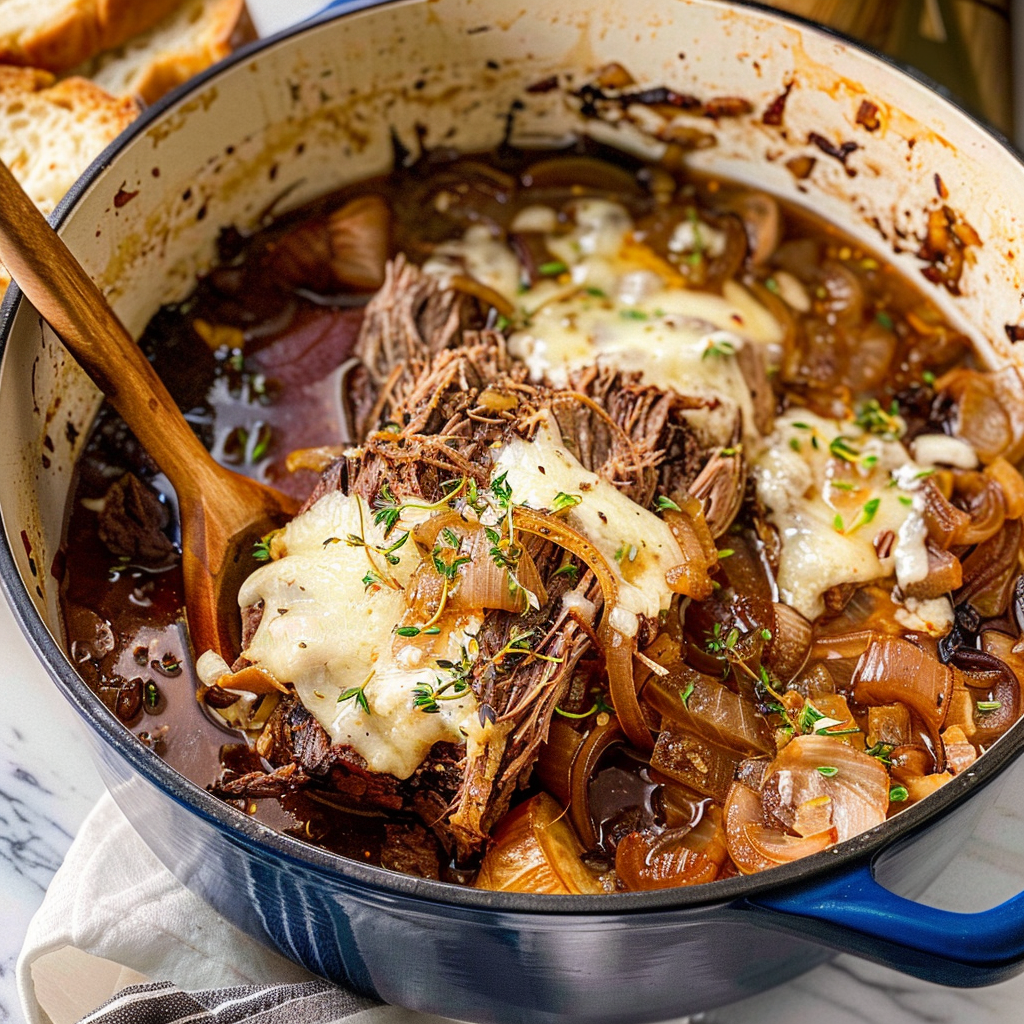
Table of Contents
What Makes French Onion Pot Roast Unique
Understanding the Flavor Base of French Onion Pot Roast
French onion pot roast stands apart because of its foundation: slow-cooked, deeply caramelized onions. When onions cook for an extended period at low heat, they release natural sugars that transform into a rich, sweet, and savory base. This is the same principle behind classic French onion soup, where onions aren’t just a supporting ingredient but the star of the dish.
In a French onion pot roast, those caramelized onions blend with beef broth and herbs to create a silky, full-bodied gravy. The beef absorbs those flavors during its long cook time, producing a dish with layers of warmth and complexity. Because this flavor profile leans heavily on onions instead of wine, it’s easy to create a version without any alcohol, making it accessible for every household.
The combination of onions, broth, and slow-cooked meat doesn’t feel heavy, though. Instead, it creates a balanced flavor that feels both rustic and refined. That’s why this dish has become a go-to comfort meal for families who want something hearty but not overpowering.
Why Slow-Cooked Beef Works Best for This Dish
A great French onion pot roast hinges on the right cut of beef and a slow cooking method. Since this recipe relies on hours of gentle heat, tougher cuts benefit the most. They begin firm, but as the connective tissues break down, they turn buttery soft.
Slow cooking does more than tenderize the beef—it allows the meat to soak in every bit of onion-rich gravy. As the roast cooks, juices from the beef blend into the onion mixture, thickening the gravy naturally and boosting the overall depth of flavor.
Low and slow heat prevents the onions from burning or turning bitter. Instead, they melt into the broth and surround the beef with comforting, aromatic richness. That long cooking time is what transforms simple ingredients into something that tastes slow-crafted and homemade, even if it takes only a few minutes of hands-on preparation.
Whether you cook it in the oven, slow cooker, or pressure cooker, the slow-braising effect remains the backbone of the dish. It is what makes French onion pot roast consistently tender, flavorful, and nearly impossible to mess up when cooked with patience.
Ingredients Breakdown for the Best French Onion Pot Roast
Choosing the Right Cut of Beef
When making a French onion pot roast, the cut of beef is crucial. Slow cooking transforms tougher cuts into tender, flavorful meat. The ideal choice is beef chuck roast, thanks to its marbling and connective tissue, which melt into the gravy as it cooks. Other excellent options include beef brisket or beef shoulder, which also become buttery soft with long cooking times. Avoid lean cuts like top round or sirloin, which can dry out during braising.
French Onion–Style Flavor Starters: Onions, Broth, Seasonings
The key to French onion flavor is the onions. Yellow onions are classic, offering the perfect balance of sweetness and savoriness when caramelized. White onions give a stronger flavor, while sweet onions like Vidalia create a softer, more delicate taste. Combining onion types can add depth.
Beef broth is traditional for a rich, savory base, but vegetable broth works for a lighter version. Seasonings should be simple: garlic, thyme, black pepper, salt, and bay leaf. Optional additions include Worcestershire sauce for extra depth or a splash of apple cider for brightness if avoiding wine.
French Onion Pot Roast Ingredients Table
| Ingredient | Quantity | Notes / Tips |
|---|---|---|
| Beef chuck roast | 3–4 lbs | Marbled, slow-cooking cut; alternative: brisket |
| Yellow onions | 4–5 large | Sliced thin for caramelization |
| Garlic cloves | 3–4 | Minced or smashed |
| Beef broth | 2–3 cups | Or vegetable broth for lighter flavor |
| Butter or oil | 2–3 tbsp | For sautéing onions |
| Fresh thyme | 2–3 sprigs | Optional for aroma |
| Bay leaf | 1–2 | Adds subtle depth |
| Black pepper | 1 tsp | Adjust to taste |
| Salt | 1–2 tsp | Adjust to taste |
| Worcestershire sauce | 1 tsp | Optional, for richer flavor |
| Apple cider (optional) | 2 tbsp | Non-alcoholic alternative to wine |
French Onion Pot Roast
- Total Time: 4 hours 20 minutes – 10 hours 20 minutes
Description
Indulge in this French Onion Pot Roast, a classic comfort meal that’s tender, flavorful, and full of rich caramelized onion goodness. Slow-cooked to perfection, this roast melts in your mouth and pairs beautifully with mashed potatoes, noodles, or fresh vegetables.
Ingredients
3–4 lbs beef chuck roast (alternatives: beef brisket, beef shoulder)
4–5 large yellow onions, thinly sliced
3–4 garlic cloves, minced or smashed
2–3 cups beef broth (or vegetable broth for lighter flavor)
2–3 tbsp butter or oil (for sautéing onions)
2–3 sprigs fresh thyme (optional for aroma)
1–2 bay leaves
1 tsp black pepper, or to taste
1–2 tsp salt, or to taste
1 tsp Worcestershire sauce (optional, for richer flavor)
2 tbsp apple cider (optional, non-alcoholic alternative to wine)
3–4 medium carrots, chopped (optional, for one-pot variation)
2–3 medium potatoes, chopped (optional, for one-pot variation)
1–2 parsnips, chopped (optional, for one-pot variation)
Instructions
Caramelize onions slowly in butter or oil.
Prepare beef with seasonings.
Layer onions and beef in slow cooker/Dutch oven/Instant Pot.
Add broth and herbs, cover.
Cook low and slow until beef is tender (time varies by method).
Serve with gravy and preferred sides.
- Prep Time: 20 minutes
- Cook Time: 4–10 hours (depending on method)
Nutrition
- Serving Size: 6–8 servings
- Calories: 450
- Fat: 15g
- Carbohydrates: 12g
- Protein: 35g
Step-By-Step Guide: How to Make a Classic French Onion Pot Roast
Step 1: Prepare the Onions
- Slice 4–5 large yellow onions thinly.
- Heat 2–3 tablespoons of butter or oil in a pan over medium-low heat.
- Cook the onions slowly, stirring often, until they turn golden brown and sweetly caramelized. This may take 20–25 minutes.
Step 2: Season the Beef
- Take a 3–4 lb beef chuck roast and pat it dry.
- Season generously with 1–2 tsp salt and 1 tsp black pepper.
- Optional: Rub 1 tsp Worcestershire sauce for extra flavor.
Step 3: Sear the Roast
- In a large pan or Dutch oven, sear the roast on all sides over medium-high heat for 2–3 minutes per side until browned.
- This step locks in flavor and enhances the beef’s richness.
Step 4: Assemble in the Pot
- Place the caramelized onions at the bottom of the slow cooker or Dutch oven.
- Add the seared roast on top of the onions.
- Pour 2–3 cups beef or vegetable broth over the meat.
- Add 2–3 sprigs of fresh thyme and 1–2 bay leaves.
- Optional: Splash 2 tbsp apple cider for non-alcoholic depth.
Step 5: Slow Cook to Perfection
- Slow Cooker: Cook on low for 8–10 hours or high for 4–5 hours.
- Oven: Cover and bake at 300°F (150°C) for 3–4 hours.
- Instant Pot: Cook at high pressure for 60 minutes.
- The beef is done when it’s fork-tender and juicy.
Step 6: Add Optional Vegetables
- If using carrots, potatoes, or parsnips, add them in the last 1–2 hours of cooking (oven or slow cooker) so they cook through but don’t become mushy.
Step 7: Rest and Serve
- Let the roast rest 10–15 minutes before slicing.
- Serve with the caramelized onion gravy and your favorite sides, such as mashed potatoes, noodles, or roasted vegetables.
If you enjoy hearty comfort meals with deep flavors, Discover great ideas like this cafeteria-style comfort dish.
Cooking Tips for Extra-Tender French Onion Pot Roast
Heat, Moisture, and Cooking Time Essentials
The secret to a perfect French onion pot roast lies in low and slow cooking. The beef chuck or brisket must be exposed to gentle heat over several hours to break down connective tissues and become tender. Rushing the process can result in dry or chewy meat, so patience is key.
Moisture is equally important. Adding enough broth ensures the meat stays juicy and creates a luscious gravy. Covering the roast tightly during cooking traps steam, which helps both the onions and beef cook evenly. Whether using a slow cooker, oven, or Instant Pot, maintain steady, moderate heat to allow flavors to meld naturally.
Cooking time varies by method:
- Slow Cooker: 8–10 hours on low, or 4–5 hours on high.
- Oven: 3–4 hours at 300°F (150°C).
- Instant Pot: About 60 minutes at high pressure.
These timings allow the onions to fully caramelize and integrate with the beef, producing the rich, deep flavor signature of French onion pot roast.
How to Avoid Dry Meat or Bitter Onions
Overcooked or dry meat is a common pitfall, even with slow cooking. To prevent this, choose well-marbled cuts, monitor liquid levels, and resist the urge to lift the lid too often. Check the roast’s internal temperature toward the end; it should be around 195–205°F for fork-tender results.
Bitter onions usually result from cooking them too quickly at high heat. To caramelize correctly, cook onions slowly with butter or oil, stirring occasionally. If they brown too fast, reduce the heat or add a splash of broth to keep them from burning.
A few extra tips for a perfect French onion pot roast:
- Let the roast rest for 10–15 minutes before slicing to retain juices.
- Skim fat from the gravy for a cleaner, richer flavor.
- Taste and adjust seasoning at the end to balance sweetness, saltiness, and depth from the onions.
What to Serve With French Onion Pot Roast
Best Side Dishes for a Balanced Meal
French onion pot roast is a hearty, flavorful main dish, so pairing it with the right sides helps create a balanced meal. Classic options include mashed potatoes, which soak up the rich onion gravy, or buttery egg noodles that complement the tender beef. Roasted root vegetables, like carrots, parsnips, and potatoes, add texture and natural sweetness, rounding out the meal.
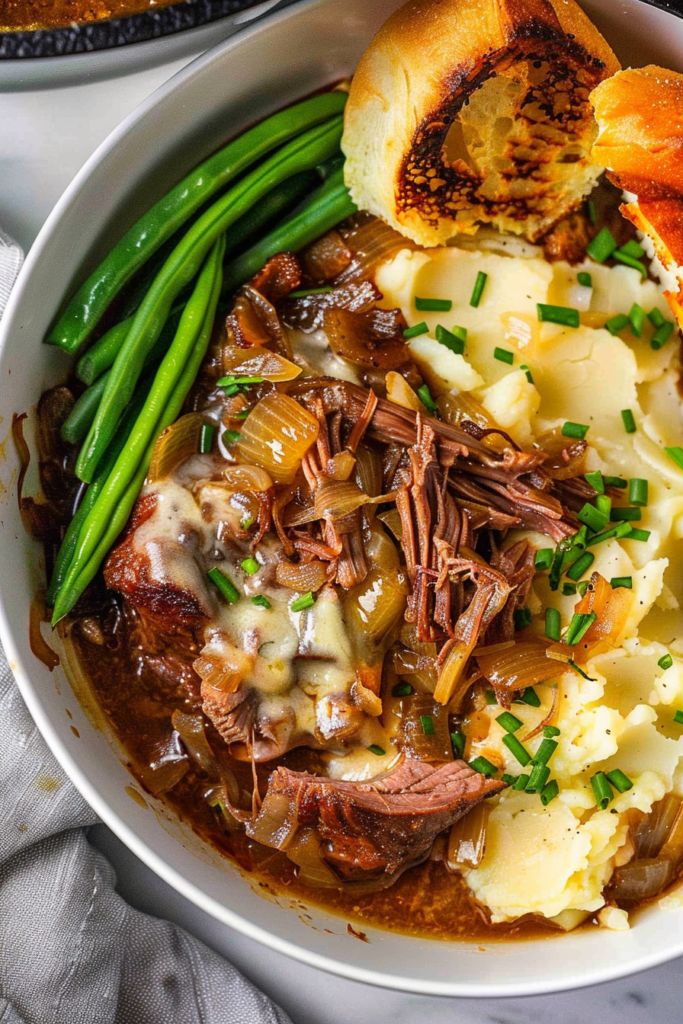
For a lighter contrast, try steamed green beans, roasted asparagus, or a simple mixed green salad. These options cut through the richness of the beef and onions while keeping the meal satisfying. The key is to mix creamy, starchy, and fresh elements so every bite is flavorful and balanced.
Light, Fresh Sides That Complement the Rich Gravy
If you prefer a fresher, more modern approach, consider serving French onion pot roast with garlic sautéed spinach, lemony quinoa, or herbed couscous. These sides absorb some of the onion gravy while introducing new flavors and textures. A crisp, tangy coleslaw or a cucumber-tomato salad also works well, providing a refreshing counterpoint to the deep, savory flavors of the pot roast.
For dinner planning inspiration, try Check out creative comfort meal ideas like this flavorful pasta recipe.
Pairing your French onion pot roast with the right sides ensures a complete meal that satisfies every palate. Whether you prefer traditional, creamy sides or lighter, fresh accompaniments, there are plenty of ways to elevate this classic comfort dish.
Storage, Freezing, and Reheating French Onion Pot Roast
How to Store Leftovers Safely
French onion pot roast makes excellent leftovers, but proper storage is essential to maintain flavor and tenderness. Allow the roast to cool slightly at room temperature for no more than 2 hours, then transfer it to an airtight container. Refrigerate for up to 3–4 days. Store the beef and gravy together whenever possible to keep the meat moist and preserve the rich onion flavor.
For longer storage, consider freezing portions. Slice or shred the beef, place it in a freezer-safe container with the onion gravy, and label it with the date. Properly stored, frozen French onion pot roast can last up to 3 months without significant loss of flavor or texture.
Best Ways to Reheat Without Drying Out the Meat
Reheating French onion pot roast requires care to prevent the beef from drying out. The easiest method is to use a saucepan or Dutch oven over low heat. Slowly warm the meat and gravy, stirring occasionally to evenly distribute heat. This method keeps the beef tender and the gravy rich and flavorful.
Alternatively, you can reheat in the oven. Preheat to 300°F (150°C), cover the roast tightly with foil, and heat for 20–30 minutes until warmed through. If using a microwave, reheat in short intervals on medium power and cover to retain moisture. Adding a splash of broth can help restore the gravy’s consistency and prevent dryness.
By following these storage and reheating tips, your French onion pot roast remains just as delicious the next day—or even a week later—making it a convenient, make-ahead comfort meal.
Troubleshooting Common French Onion Pot Roast Issues
Why Your Roast Might Be Tough
Even when following a recipe carefully, sometimes the beef can turn out tougher than expected. The main reason is usually cooking too quickly or at too high a temperature. French onion pot roast relies on low and slow cooking to break down connective tissue and marbling, transforming tougher cuts into tender, juicy meat. Choosing a lean cut or skipping proper braising can also lead to toughness.
To fix a tough roast, consider slicing it thinly against the grain before serving or returning it to low heat with additional broth. This method helps the meat absorb more moisture and can salvage even a slightly overcooked roast.
Fixing Thin Gravy or Undercooked Onions
Thin gravy or undercooked onions are common mistakes, but both are easy to correct.
- Thin Gravy: Simmer the liquid uncovered for 10–15 minutes to reduce and thicken naturally. For a faster solution, mix a small amount of cornstarch or flour with cold water and stir into the gravy until it reaches the desired consistency.
- Undercooked Onions: If the onions haven’t fully caramelized, remove the beef, sauté the onions in butter or oil on medium-low heat until golden brown, then return the beef and continue cooking. This ensures that every bite carries the rich, savory sweetness that defines French onion pot roast.
By addressing these common issues, you can ensure your French onion pot roast turns out perfectly tender, flavorful, and visually appealing every time. Following these troubleshooting tips will help you confidently recreate this classic comfort dish without fear of mishaps.
FAQs About French Onion Pot Roast
Can I make French onion pot roast in advance?
Yes! French onion pot roast actually tastes better the next day as the flavors meld. Store in an airtight container in the fridge for up to 3–4 days. You can also freeze portions for up to 3 months and reheat gently to maintain tenderness.
What’s the best cut of beef for French onion pot roast?
The ideal cuts are beef chuck roast, beef shoulder, or brisket. These cuts have enough marbling and connective tissue to become tender during slow cooking, absorbing the rich onion flavor perfectly.
Can I make it without alcohol?
Absolutely. Use apple cider, pomegranate juice, or sparkling grape juice instead of wine. These non-alcoholic alternatives bring acidity and sweetness, complementing the caramelized onions and rich beef.
How do I prevent onions from burning?
Cook onions slowly over medium-low heat with butter or oil, stirring frequently. If they brown too quickly, lower the heat or add a splash of broth. Patience is key for deep, sweet caramelization.
Can I add vegetables to the pot roast?
Yes! Carrots, potatoes, and parsnips work beautifully. Add them to the pot during the last 1–2 hours of cooking in the oven or slow cooker to ensure they stay tender but not mushy.
How should I reheat leftovers?
Reheat gently in a saucepan or Dutch oven over low heat, stirring occasionally. You can also use the oven at 300°F (150°C) covered with foil, or microwave in short intervals with a splash of broth to retain moisture.
Conclusion
French onion pot roast is the ultimate comfort meal—rich, savory, and surprisingly easy to master. With the right cut of beef, perfectly caramelized onions, and low-and-slow cooking, you can create a tender, flavorful roast that satisfies every craving. From classic preparations to alcohol-free versions and vegetable-loaded variations, this dish is adaptable and perfect for any occasion. Pair it with mashed potatoes, noodles, or fresh greens for a complete, satisfying meal.